Is irs@service.govdelivery.com a legitimate IRS email address? Yes, the IRS identifies this address as a sender for certain official emails, including IRS News Bulletins and messages relating to Preparer Tax Identification Numbers (PTINs). However, scammers can spoof a sender address. Seeing those exact characters in a message’s From line does not prove that the message is authentic.
Quick verdict: The address has documented legitimate IRS uses. Verify the specific email separately before clicking links, opening attachments, paying money or disclosing account details. Open IRS.gov yourself to investigate a purported tax matter.
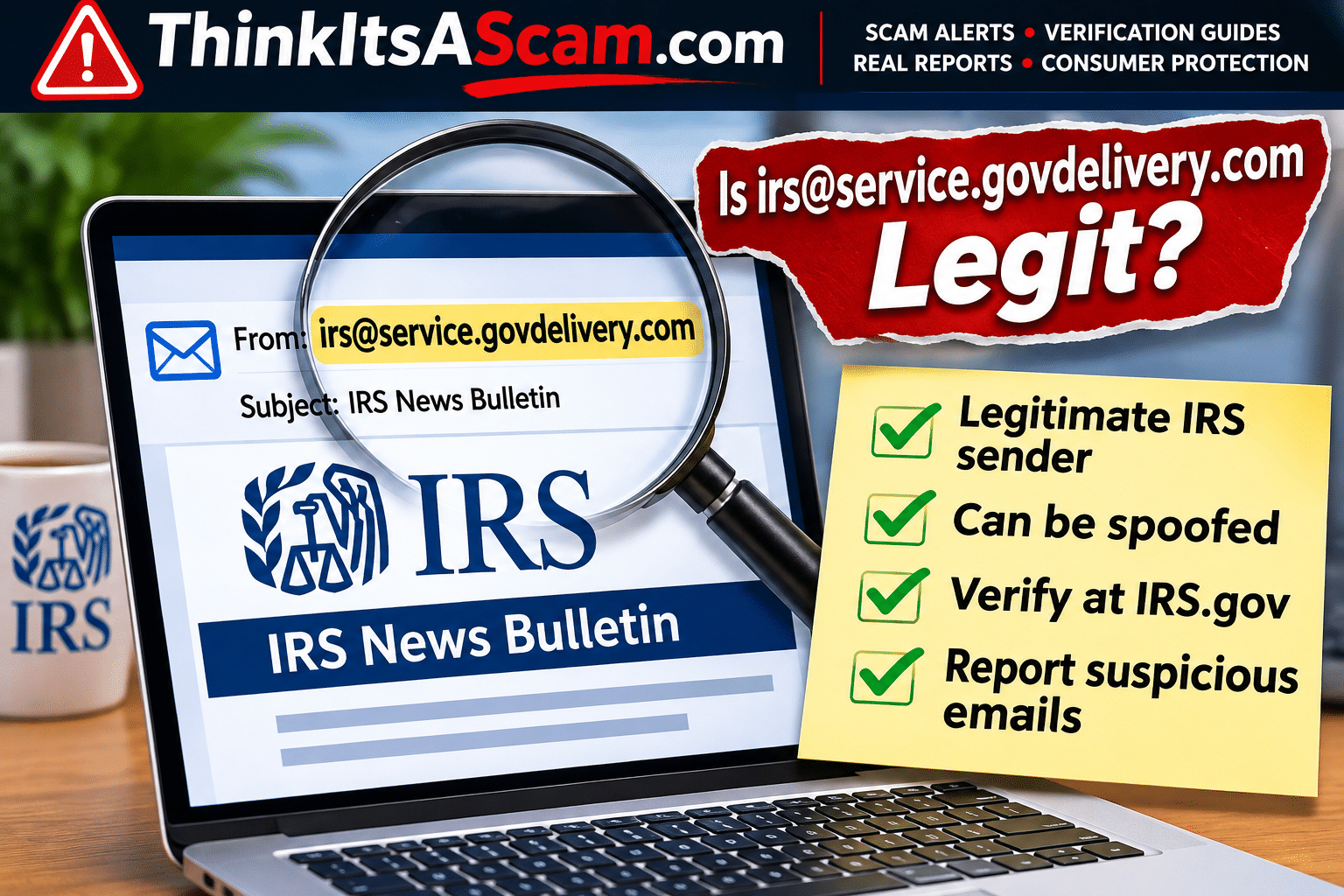
Why does the IRS use irs@service.govdelivery.com?
The IRS lists irs@service.govdelivery.com among the addresses used for official IRS News Bulletins. Its PTIN holder guidance also identifies the address for related correspondence and specifically warns that malicious actors attempt to spoof IRS email addresses.
A real government bulletin, an account-related professional message and an impersonation email may appear to use the same sender text. The exact address alone cannot separate them. This article does not authenticate any reader’s individual message.
Can a fraudulent IRS email show the same From address?
Yes. The displayed sender name and From address can be forged, or an email could misleadingly present an official-looking address elsewhere in the message. A familiar logo, formal wording or seemingly accurate taxpayer information is not independent verification.
Be especially cautious if an unexpected message urges you to claim a refund, settle a tax debt immediately, open an attachment, share a password, enter a one-time verification code, or provide sensitive identity or bank information. These are reasons to verify; they do not establish that all legitimate IRS emails are fraudulent.
How to check the email without using its links
- Pause before responding. Do not use a link, attachment, payment button or reply address from a message you are unsure about.
- Identify its stated purpose. Is it a newsletter you signed up for, a PTIN notice, or a demand involving a tax account? Different purposes require different checks.
- Open IRS.gov independently. Type the official site address yourself and navigate to the relevant information or secure account service.
- Compare against the IRS’s published guidance. Review How to Know It’s the IRS and, for PTIN-related correspondence, the PTIN holder guidance.
- Verify a real account issue through the official service. Do not rely on a supposed phone number, account portal or payment destination supplied solely in the email.
Where should you report a suspicious IRS message?
The IRS’s phishing-report guidance explains how to send suspicious tax-related messages to phishing@irs.gov, including forwarding an email as an attachment when possible to preserve headers. Follow the current official instructions and avoid editing the original message before reporting.
What if you already clicked or shared information?
- Clicked but submitted nothing? Close the page and do not install anything. A click by itself does not confirm account compromise; assess whether any file was downloaded.
- Entered a password or a code? Go directly to the real affected service, change compromised credentials, review account activity and enable multifactor authentication where available.
- Shared a Social Security number or identity details? Visit IdentityTheft.gov for an appropriate recovery plan.
- Paid money or provided bank/card details? Contact your bank or card issuer through its verified channel immediately. Ask about stopping or disputing a transaction; recovery is not guaranteed.
- Opened an attachment or installed software? Update your security software, run a scan and follow its recommendations. Use a trusted device for sensitive account changes if needed.
IRS GovDelivery email FAQs
Is irs@service.govdelivery.com a real IRS sender address?
Yes. The IRS documents legitimate uses for this exact address, including News Bulletins and some PTIN communications. That does not authenticate any individual email showing it.
Does the sender address prove that the email is safe?
No. Email addresses and names can be spoofed. Independently verify a requested action through IRS.gov instead of relying on the displayed From field.
Should I reply to a suspicious IRS email?
No. Consult the IRS’s own phishing-reporting instructions and verify any account matter through the official IRS website rather than replying or using the message’s links.
Evidence note (October 27, 2026): This guide verifies the address’s documented uses and official reporting route. We did not authenticate a particular recipient email, identify a fraud operator or establish new victim counts. A rising search query is not proof of a new scam wave.
Leave a Reply