Did you see a warning claiming that criminals place a screw inside a gas pump nozzle holder so they can charge fuel to the previous customer? The warning describes what is often called the gas station screw scam, gas pump screw method, or nozzle cradle scam.
The claim needs context. Early viral reports were investigated and described as unverified or unfounded. In July 2026, however, police in Fowlerville, Michigan, reported finding a pump with a drilled hole and screw in the nozzle holder and warned that it appeared to be deliberate tampering.
The safest conclusion is that the screw method should not be presented as a proven nationwide crime wave. Still, visible pump damage should be taken seriously, and drivers should protect themselves from confirmed gas-station risks such as pump switching and card skimming.
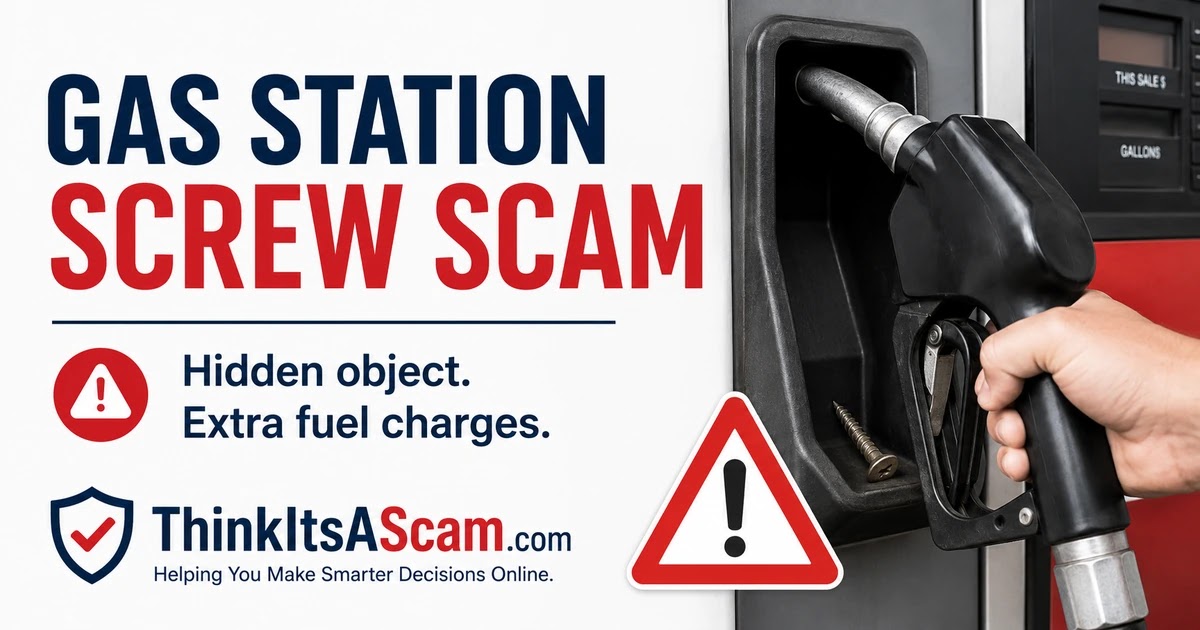
Quick Verdict
Status: Disputed and not established as a widespread scam.
The original viral warning claimed that a loose screw or wedge placed in a nozzle cradle could keep a completed fuel transaction open. A May 2026 fact-check found no confirmed victims, arrests, or documented cases and rated the circulating claim a hoax. One Maryland sheriff’s office also said the local screw reports it reviewed were unfounded.
A later July 2026 report from CBS Detroit said Fowlerville police found a drilled hole and screw in a pump’s nozzle holder and treated it as suspected tampering. That report adds a credible reason for caution, but it does not establish that the method is common or that every screw near a nozzle holder is evidence of fraud.
Do not panic over an ordinary fastener, but do not use a pump that appears drilled, damaged, loose, or altered. Notify the station attendant and select a different pump.
What Does the Gas Station Screw Scam Warning Claim?
The circulating warning describes this sequence:
- A person places a screw, wedge, or other object in the fuel nozzle cradle.
- A customer authorizes the pump and buys fuel.
- The customer returns the nozzle and leaves.
- The obstruction allegedly prevents the dispenser from recognizing that the nozzle was returned.
- The transaction supposedly remains active.
- Another person pumps fuel that is charged to the first customer’s card.
This description was repeated in social-media posts and local news reports. Repetition alone does not confirm that a simple screw can defeat every dispenser’s transaction controls or that the claimed theft occurred at each pump shown online.
Is the Gas Pump Screw Method Real?
The evidence is mixed, and the timeline matters.
Why the Early Viral Warning Was Challenged
A May 2026 Snopes investigation of the gas pump screw claim reported that it could not locate a verified victim, arrest, or criminal case demonstrating the method. Fuel companies contacted during that investigation also said they were unaware of reported incidents.
An updated Axios report about gas pump scam warnings noted that the Queen Anne’s County Office of the Sheriff later said reports of screws being used fraudulently in that Maryland county were unfounded.
What Changed in July 2026
CBS Detroit subsequently reported that the Fowlerville Police Department in Michigan found a pump with a small drilled hole and screw in the nozzle holder. Police warned that the alteration could interfere with the dispenser’s ability to recognize that the nozzle had been returned.
The public report described suspected tampering, but it did not establish a nationwide pattern. Consumers should therefore avoid both extremes: do not repeat the screw method as a universally proven scam, and do not ignore clear signs that a particular dispenser has been deliberately altered.
Gas Pump Screw Claim vs. Confirmed Pump Scams
Several different fuel-station risks are often combined under the phrase “gas pump scam.” They are not the same:
- Screw-method claim: An object allegedly interferes with the nozzle holder so a prior transaction stays open. Public evidence remains limited and disputed.
- Pump switching: A person distracts a customer or offers unsolicited help, takes control of the nozzle, and avoids properly ending the customer’s transaction before using it to dispense more fuel.
- Card skimming: An illegal device captures card data or a PIN at a fuel pump or other payment terminal.
- Ordinary authorization hold: A temporary pending amount may appear before the final fuel purchase posts. A hold is not automatically an unauthorized charge.
What Is Pump Switching?
Pump switching is a real social-engineering and fuel-theft risk. A stranger may offer to help an older driver, a person with a disability, or anyone who appears distracted. Instead of ending the sale, the person keeps control of the nozzle or moves it to another vehicle or container.
The corrected Axios report cited the National Association of Convenience Stores in distinguishing confirmed pump-switching incidents from the disputed viral screw story.
Protect yourself by politely declining unsolicited help, staying with the nozzle, returning it yourself, and confirming that the sale has ended before walking away.
Card Skimming at Gas Pumps Is a Confirmed Risk
Skimming is separate from the screw-method claim. A skimmer is an illegal device installed on or inside a fuel pump or payment terminal to capture payment-card data. A hidden camera or keypad overlay may also record a PIN.
The FBI’s skimming guidance says fuel-pump skimmers are often connected to internal wiring and may not be visible to customers. The FBI recommends choosing a pump near the store, considering payment inside, using tap to pay when available, covering the keypad, and monitoring accounts.
The FTC’s gas-pump skimming warning also advises consumers to inspect the pump panel and card reader, avoid equipment that looks loose or altered, and report suspicious devices to the attendant.
Gas Pump Warning Signs
Stop and use another dispenser if you notice:
- An unexplained screw, drilled hole, wedge, or fresh damage near the nozzle holder.
- A nozzle cradle that looks different from the holders on nearby pumps.
- A loose, crooked, damaged, or unusually bulky card reader or keypad.
- A broken, lifted, or “void” security seal on the pump cabinet.
- A display that does not show that the sale has ended.
- A stranger who insists on helping, handles the nozzle, or remains close to your transaction.
- A receipt or final posted charge that exceeds the fuel you purchased.
Do not pull out, loosen, or remove a suspicious object. Note the pump number, notify the attendant, and allow station personnel or law enforcement to examine it.
How to Protect Your Card at a Gas Pump
- Inspect the dispenser. Look at the nozzle holder, card reader, keypad, cabinet panel, and security seal before paying.
- Choose a visible pump. A dispenser near the building and within view of employees may be a less attractive tampering target.
- Use tap to pay when available. The FBI says contactless payment is less likely to be compromised by a skimmer than swiping or inserting a card.
- Consider paying inside. This avoids entering card information at the outdoor dispenser.
- Protect your PIN. If you must enter one, cover the keypad and check for an overlay.
- Decline unsolicited help. Do not let a stranger take control of your nozzle or payment transaction.
- Stay at the pump. Do not leave the nozzle unattended while the transaction is active.
- Confirm the sale ended. Return the nozzle securely and wait for the screen to show that the transaction is complete or has returned to its normal starting display.
- Save the receipt. Compare the gallons and final amount with your card or bank activity.
- Enable transaction alerts. Prompt notifications can help you identify unexpected activity quickly.
What If the Pump Does Not Reset?
- Do not leave the dispenser unattended.
- Do not allow another person to use the nozzle.
- Press the cancel or end control if the dispenser provides one.
- Contact the station attendant immediately.
- Ask the employee to confirm that the transaction has closed.
- Request a printed or electronic receipt.
- Record the station, pump number, time, gallons, and purchase total.
- Check the payment account for the final posted amount.
If you see a suspicious screw, drilled hole, broken panel, or other physical alteration, do not use that pump. Notify the station and consider contacting local law enforcement if deliberate tampering or theft appears to have occurred.
Is a Large Pending Gas-Station Charge Fraud?
Not always. Pay-at-the-pump transactions may begin with a temporary authorization hold that is higher than the fuel actually purchased. The pending amount may later disappear or be replaced by the completed purchase total.
Compare the transaction status, amount, time, receipt, and final posted charge. The ChargeOnMyCard.com guide to unrecognized charges explains the difference between a pending authorization, billing error, and unauthorized transaction.
Contact the card issuer promptly when the final posted amount is wrong, nobody authorized the purchase, more suspicious transactions appear, or the issuer’s app shows continued activity after you left the station.
What to Do If You Were Charged for Someone Else’s Fuel
- Save the receipt and take screenshots of the transaction details.
- Write down the station name, address, pump number, date, time, gallons, and amount you actually purchased.
- Contact the station manager and ask that relevant pump records and security video be preserved.
- Contact your card issuer or bank using the number on the back of the card or its official app.
- Explain which portion of the charge you did not authorize and ask about locking, replacing, or monitoring the card.
- Follow the issuer’s dispute instructions and retain the case number and correspondence.
- Report suspected physical tampering or fuel theft to local law enforcement.
The Consumer Financial Protection Bureau’s credit-card dispute guidance recommends notifying the card company immediately and explains when written notice may be needed to protect billing-error rights.
For an unauthorized debit-card or bank transaction, notify the bank or credit union immediately. Reporting deadlines and protections can differ from credit-card rules.
Frequently Asked Questions
Is the gas station screw scam real?
The widespread viral version was initially unsupported and was labeled a hoax after investigators found no verified cases. A later Michigan police report described one pump with a drilled hole and screw that authorities considered suspected tampering. The available reporting supports caution, but not a claim that the method is widespread or proven at every pump shown online.
Why did some police departments warn about it?
Some agencies repeated reports of possible tampering or combined the screw claim with the separate pump-switching tactic. At least one Maryland sheriff’s office later said the screw reports in its county were unfounded. Fowlerville police issued a later warning after finding what they described as an altered pump.
Can a screw keep every gas pump transaction open?
No reliable public evidence establishes that one simple method works on every fuel dispenser. Pump designs, software, timers, station controls, and transaction procedures vary. Treat actual damage as suspicious, but do not assume that every visible fastener proves a working scam.
What is pump switching?
Pump switching occurs when another person takes control of a customer’s active fueling transaction and prevents it from ending normally, often after offering unsolicited help or distracting the customer. The person then uses the still-active transaction to dispense more fuel.
How can I tell whether an extra amount is a hold or fraud?
Check whether the amount is pending or completed. A temporary authorization may later be replaced by the actual fuel total. Compare the final posted amount with your receipt and contact the issuer promptly if the completed transaction is wrong or unauthorized.
What should I do if I see a screw or drilled hole?
Do not use the pump and do not remove the object. Notify the attendant, use a different dispenser, and record the pump number. Contact local law enforcement if deliberate tampering or theft appears to be involved.
Official and Consumer Resources
- FBI: Skimming and Fuel-Pump Safety Tips
- FTC: Watch Out for Card Skimming at the Gas Pump
- CFPB: How to Dispute a Credit-Card Charge
- ChargeOnMyCard.com: Unrecognized Credit Card or Bank Charge
Related TIAS Posts
These ThinkItsAScam.com articles cover closely related unauthorized-payment alerts and card-security concerns:
Bottom Line
The viral gas station screw scam warning was initially circulated without a verified criminal case, and one sheriff’s office later said its local reports were unfounded. A subsequent Michigan police warning described a pump with a drilled hole and screw that appeared to be deliberate tampering.
That later report makes it reasonable to inspect a nozzle holder for obvious damage, but it does not prove a widespread nationwide scam. The more firmly established risks are pump switching, card skimming, and unauthorized use of payment-card data.
Inspect the dispenser, decline unsolicited help, stay until the transaction ends, save the receipt, and report any suspicious final charge to the station and your card issuer promptly.
Have You Seen a Tampered Gas Pump?
Share the non-sensitive details below to help other drivers understand current reports.
- What city and state was the station in?
- What did you notice near the nozzle holder, card reader, or pump panel?
- Did the screen show that the transaction ended?
- Did the final posted charge match your receipt?
- Did the station or police inspect the pump?
- Was the issue identified as tampering, a mechanical problem, or a temporary authorization hold?
Please do not post your complete card number, bank-account number, PIN, security code, receipt number, transaction ID, home address, telephone number, or other sensitive personal information in the comments.
Page reviewed and updated: August 24, 2026.
Disclaimer
ThinkItsAScam.com is an independent consumer-information website and is not affiliated with any gas station, fuel brand, payment-card issuer, bank, law-enforcement agency, the FBI, FTC, CFPB, Snopes, Axios, or CBS News. This article distinguishes disputed viral claims, reported suspected tampering, confirmed skimming risks, and pump-switching reports. It does not claim that every screw, fastener, damaged pump, payment hold, or billing difference is evidence of criminal activity. Fuel dispensers, payment procedures, fraud protections, reporting requirements, and dispute deadlines can vary. This article is for general consumer education and is not legal, financial, technical, or law-enforcement advice.
Leave a Reply