Consumers are reporting being targeted by a sophisticated investment scam involving a company calling itself Kimel and Rowe. Victims claim they were approached with investment opportunities, shown impressive account balances, and led to believe their money was generating substantial returns.
Unfortunately, many people later discovered they could not withdraw their funds. Reports indicate that what appeared to be a legitimate investment operation may have been an elaborate scheme designed to collect deposits while preventing victims from accessing their money.
What Is the Kimel and Rowe Scam?
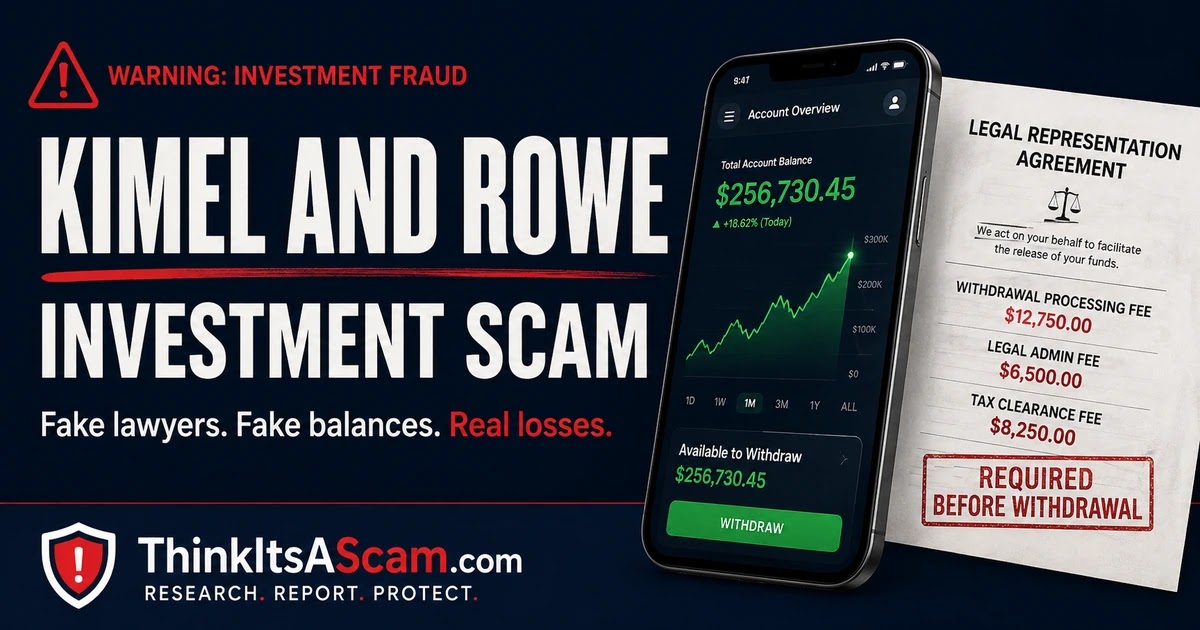
The Kimel and Rowe scam is an alleged investment fraud operation that reportedly used fake lawyers, fabricated account statements, and false promises of investment returns to gain the trust of victims.
According to reports from affected consumers and scam investigators, victims were shown what appeared to be profitable investment accounts and were encouraged to deposit additional funds.
However, when investors attempted to withdraw their money, they allegedly encountered new fees, taxes, legal requirements, or other obstacles that prevented them from accessing their funds.
How the Scam Works
A typical victim reports the following sequence:
-
An investment opportunity is presented through social media, messaging apps, or online contacts.
-
The victim deposits money into what appears to be a legitimate investment platform.
-
The account balance appears to grow significantly.
-
The victim is encouraged to invest additional funds.
-
When the victim attempts to withdraw money, new requirements suddenly appear.
-
Additional payments are requested for taxes, legal fees, processing fees, or account verification.
-
The withdrawal never occurs despite the additional payments.
In many cases, scammers continue requesting more money until the victim realizes the funds are unlikely to be recovered.
Fake Lawyers and Legal Documents
One of the more concerning aspects of the alleged scheme involves individuals claiming to be attorneys or legal representatives.
Victims report receiving:
-
Legal-looking documents
-
Official-sounding notices
-
Attorney correspondence
-
Court-related explanations
-
Regulatory compliance requests
These communications are often designed to make the operation appear legitimate and to persuade victims to continue sending money.
Common Warning Signs
Consumers should be cautious if they encounter any of the following:
Guaranteed Returns
Legitimate investments carry risk. Promises of consistent or unusually high returns should raise concerns.
Problems With Withdrawals
One of the most common signs of an investment scam is difficulty withdrawing funds.
Requests for Additional Fees
Scammers often claim that taxes, legal fees, insurance fees, or processing fees must be paid before funds can be released.
Pressure to Act Quickly
Victims may be told they must send money immediately to avoid losing access to their accounts.
Unverified Legal Representatives
Be cautious when individuals claiming to be attorneys contact you regarding investments or withdrawals.
How to Protect Yourself
Verify Investment Companies
Research any investment company independently before sending money.
Verify Attorneys Separately
If someone claims to be a lawyer, independently verify their credentials through official state bar associations.
Be Skeptical of Withdrawal Fees
Legitimate financial institutions generally deduct fees from existing balances rather than requiring separate payments before releasing funds.
Never Chase Lost Money
Many victims lose additional funds trying to recover money already lost in an investment scam.
What to Do If You Were Targeted
If you believe you were targeted by the Kimel and Rowe scam:
-
Stop sending money immediately.
-
Save all emails, messages, and account screenshots.
-
Document payment records and transaction details.
-
Contact your financial institution if recent payments were made.
-
Report the incident to appropriate law enforcement and consumer protection agencies.
-
Be cautious of recovery scams that promise to retrieve lost funds for an upfront fee.
The sooner you act, the greater the chance of limiting additional losses.
Related Scam Warnings
Consumers researching Kimel and Rowe may also want to review:
Have You Been Contacted by Kimel and Rowe?
Share your experience below.
-
How were you first contacted?
-
Were investment returns promised?
-
Did you encounter withdrawal problems?
-
Were additional fees requested?
-
Did anyone claiming to be a lawyer contact you?
Your experience may help others avoid becoming victims of similar investment scams.
Disclaimer
ThinkItsAScam.com is an independent consumer information website. This article is based on publicly reported allegations, consumer complaints, and scam investigations. Readers should conduct their own research and consult appropriate professionals regarding investment decisions.
Leave a Reply