If you received an email, letter, text, or social media message inviting you to join an honor society, you may be wondering whether it is real or a scam. Searches like “honor society scam,” “honor society invitation scam,” “college honor society scam,” “high school honor society scam,” and “is this honor society legit” usually come from students and parents who are unsure whether to pay a membership fee.
The short answer is that not every honor society invitation is fake. Some honor societies are legitimate and respected. Some are real but may not provide enough value for the fee. Others may be misleading, low-value, or outright phishing scams designed to collect money or personal information.
Before paying, verify the exact organization name, website, membership requirements, fee structure, scholarship rules, school connection, and whether colleges or employers are likely to recognize the membership.
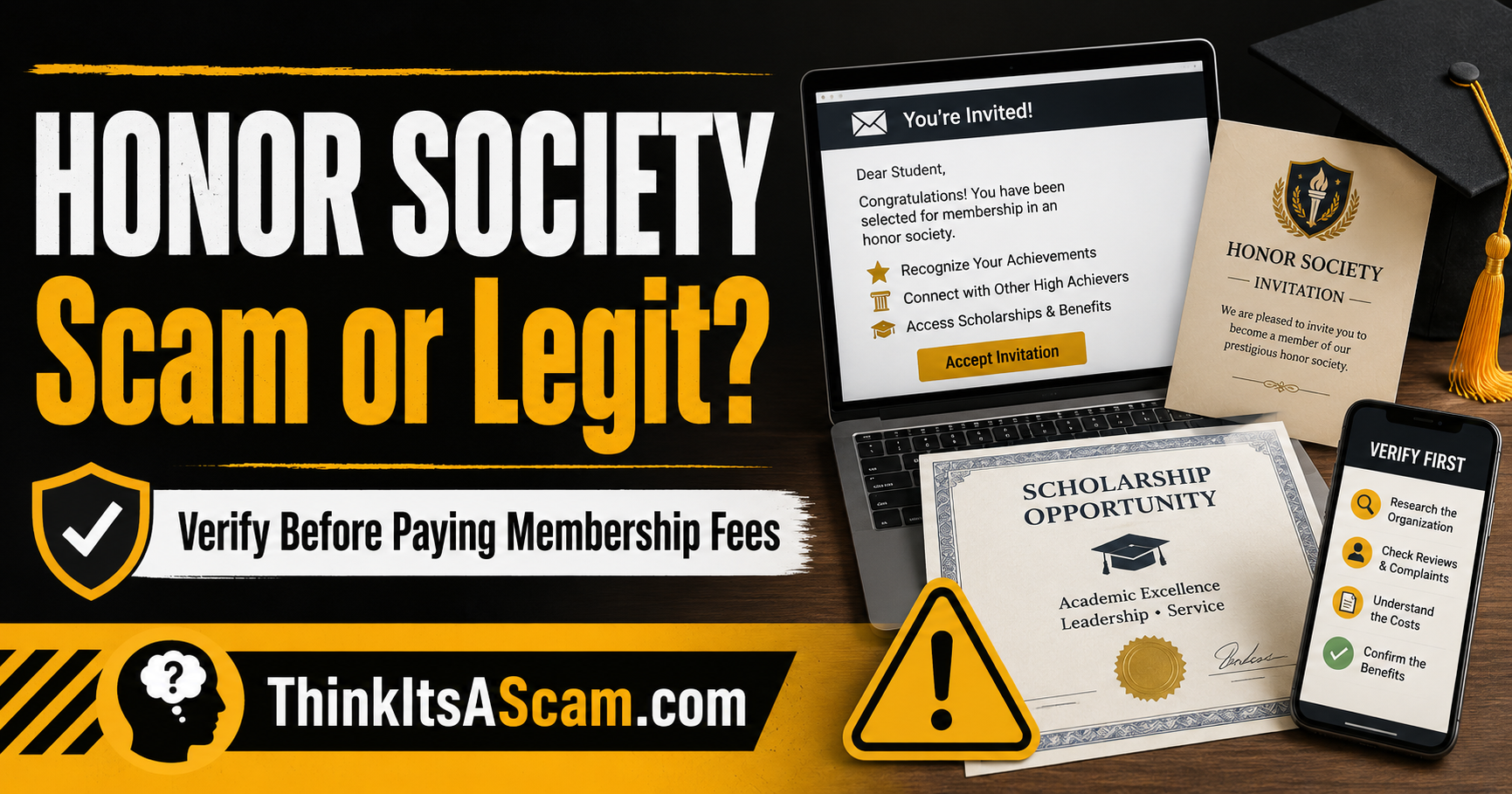
Quick Verdict
Some Are Legitimate, Some Are Low-Value, and Some May Be Fake — Verify Before Paying.
A real honor society should clearly explain who it is, how students qualify, what the membership fee covers, whether scholarships require a separate fee, and whether the organization is connected to your school or college.
Do not pay just because the invitation says you were “selected,” “nominated,” “pre-approved,” “recognized,” or “eligible.” Those phrases can sound prestigious, but they do not always mean the invitation is exclusive or valuable.
What Is the Honor Society Scam Concern?
The “honor society scam” concern usually comes from students receiving unexpected invitations that look official, personalized, or exclusive. The invitation may praise the student’s academics, leadership, or potential, then ask for a membership fee.
That does not automatically mean the group is fake. The concern is whether the invitation is truly selective, whether the benefits are worth the cost, and whether the organization is being confused with a more recognized school-based honor society.
Students and parents should separate three different issues:
- Legitimate honor societies that have real standards, chapters, benefits, and recognition.
- Real but low-value membership groups that may provide certificates, emails, discounts, or scholarship access but limited admissions or career value.
- Fake or misleading scams that use honor society language to collect fees, steal information, or send phishing links.
Real Honor Society vs. Paid Recognition Group vs. Fake Scam
Real Honor Society
A legitimate honor society usually has clear eligibility requirements, a recognizable school or college connection, transparent fees, real chapters or members, and a clear explanation of benefits. Some respected societies are tied to specific schools, academic departments, majors, or national associations.
Paid Recognition Group
Some groups are real organizations but mainly offer paid recognition, certificates, member portals, newsletters, discounts, or scholarship lists. These may not be scams, but students should ask whether the fee provides meaningful value.
Fake Scholarship or Honor Society Scam
A fake scam may use a generic name, urgent language, misleading promises, or fake scholarship claims to get students to pay quickly. It may also ask for sensitive personal information, login credentials, banking details, or payment through unusual methods.
National Honor Society vs. Other Honor Societies
One major source of confusion is the difference between the National Honor Society and other honor-society-style invitations.
National Honor Society
The National Honor Society, often called NHS, is typically school-based. Students are usually considered through their local school chapter and evaluated using criteria such as scholarship, service, leadership, and character.
NSHSS
The National Society of High School Scholars, or NSHSS, is a separate organization. Many students search “NSHSS scam” because the name can be confused with NHS and because the invitation often involves a membership fee. NSHSS may be real, but families should still decide whether the benefits justify the cost.
College Honor Societies
College students may receive invitations from academic, major-specific, leadership, or general honor societies. Some are highly respected. Others may be less recognized or more focused on paid membership benefits.
Generic “Honor Society” Emails
Some invitations use broad wording such as “Honor Society,” “National Honor Society,” “Scholars Society,” “Leadership Society,” or “Academic Excellence Society.” Always verify the exact legal name and website before paying.
Warning Signs Before You Pay a Membership Fee
Be cautious if an honor society invitation includes these warning signs:
- The invitation creates urgency or pressure to join immediately.
- The organization name is very similar to a better-known society.
- The email looks official but is not from your school.
- The website does not clearly explain eligibility requirements.
- The group claims membership will strongly improve college admissions without proof.
- The invitation says you won or qualified for a scholarship you never applied for.
- You must pay a fee before learning details about scholarships or benefits.
- The group asks for sensitive information unrelated to membership.
- The sender asks for your school login, email password, or bank information.
- The organization has many complaints about value, refunds, or misleading marketing.
Questions Students and Parents Should Ask
Before joining any honor society, ask these questions:
- What is the exact name of the organization?
- Is it connected to my school, college, or academic department?
- How was I selected?
- What GPA, service, leadership, or academic criteria are required?
- Is the membership fee one-time or recurring?
- Are there annual dues, renewal fees, event fees, or add-on purchases?
- Can I apply for scholarships without paying extra?
- How many scholarships are awarded and how competitive are they?
- Will colleges, graduate schools, or employers recognize this membership?
- Can my school counselor, advisor, or financial aid office confirm the organization?
Does Joining an Honor Society Help With College Admissions?
Membership alone is usually less important than what the student actually does. Colleges tend to care more about grades, course rigor, leadership, service, awards, essays, activities, and real accomplishments.
Listing a legitimate honor society on an application may be fine, but paying for membership does not automatically make a student stand out. A certificate or paid listing is not the same as strong grades, leadership, service, research, athletics, work experience, or community impact.
If the invitation implies that joining will significantly improve college admissions, ask for evidence and talk with a school counselor before paying.
How to Check Whether an Honor Society Is Legitimate
Use a step-by-step process before paying any membership fee.
- Search the exact organization name plus “complaints,” “reviews,” “scam,” and “membership fee.”
- Check whether the group is connected to your school or college.
- Ask your guidance counselor, academic advisor, or financial aid office.
- Review the official website and look for transparent eligibility rules.
- Check whether the organization lists a real address and support contact.
- Look for a clear refund policy.
- Check whether the organization is listed by a recognized honor society association when relevant.
- Review scholarship details before paying.
- Confirm whether membership is actually required to access the benefits you want.
Honor Society Fee: Scam or Just Not Worth It?
A membership fee does not automatically make an honor society a scam. Many legitimate organizations charge dues to fund programs, publications, events, scholarships, or member support.
The better question is whether the fee is worth it for your student.
It may be worth considering if:
- The organization is recognized in your academic field.
- Your school or department actively supports it.
- You plan to use the scholarships, events, networking, or leadership opportunities.
- The fee is affordable and clearly explained.
- Members you trust report real value.
It may not be worth it if:
- You only want a certificate or résumé line.
- The organization is not recognized by your school or field.
- The benefits are vague.
- The scholarships are extremely competitive or unclear.
- You feel pressured to pay quickly.
Scholarship Scam Warning Signs
Some scams use honor society language to make scholarship offers seem more credible. Be especially careful if the message says:
- You won a scholarship you never applied for.
- You must pay a fee to receive scholarship money.
- You must provide bank information to confirm eligibility.
- The scholarship is guaranteed.
- You must act immediately or lose the award.
- The sender asks for your FAFSA login or school portal password.
- The organization refuses to explain selection criteria.
Legitimate scholarship programs should be able to explain eligibility, deadlines, award amounts, selection criteria, and whether any membership is required.
What to Do If You Already Paid
If you already paid for an honor society membership and now feel unsure, take these steps:
- Save the invitation, receipt, welcome email, and membership terms.
- Log in and review what benefits were actually provided.
- Check whether the fee is one-time or recurring.
- Look for refund or cancellation options.
- Contact the organization in writing if you want a refund.
- Watch your card statement for additional charges.
- Dispute unauthorized or deceptive charges with your card issuer if needed.
- Report phishing, fake scholarships, or deceptive claims to the FTC.
If you received some membership benefits but later decided they were not valuable, that may be a low-value purchase rather than fraud. If the organization lied, used a fake school connection, charged you without permission, or never provided what was promised, the concern is more serious.
What to Do If You Shared Personal Information
If you shared sensitive personal information through a suspicious honor society link, act quickly.
- Change any passwords you entered.
- Do not reuse the same password across school, email, banking, or scholarship accounts.
- Enable multi-factor authentication on important accounts.
- Contact your school if you entered a school login.
- Watch for follow-up phishing emails or texts.
- Monitor bank and credit card accounts if payment information was entered.
- Consider a fraud alert or credit freeze if identity information was exposed.
Bottom Line: Honor Society Scam or Legit?
An honor society invitation is not automatically a scam. Some honor societies are legitimate and respected, some are real but may offer limited value, and some may be fake or misleading.
The safest approach is to verify the exact organization before paying. Check whether it is connected to your school, whether the benefits are clear, whether scholarships require extra fees, whether the membership is recognized in your field, and whether the organization has a history of complaints.
Students and parents should not feel pressured by a fancy invitation, personalized letter, certificate offer, or “selected scholar” language. Research first, ask your school counselor or advisor, and pay only if the benefits are worth the cost.
Related Resources
Helpful official and consumer resources:
- FTC: How to Avoid Scholarship and Financial Aid Scams – Red flags involving scholarship fees, fake invitations, and financial-aid scams.
- National Honor Society – Official NHS website for school-based National Honor Society information.
- NHS Membership Information – Official information about NHS membership criteria.
- Association of College Honor Societies – Resource for checking certified college honor societies.
- ACHS Certified Member Societies – Directory of ACHS-certified college honor societies.
- Federal Student Aid – Official federal student aid information.
- ReportFraud.ftc.gov – Report fake scholarships, phishing, and deceptive offers.
Related Scam Warnings
Students and parents researching honor society scam concerns may also want to review these related education, membership, billing, and verification warnings:
- SCLA Honor Society Scam or Legit?
- Symple Path Scam or Legit?
- TruthFinder Scam or Legit?
- MyInsuranceInfo.com Scam or Legit?
- ClinCard Scam or Legit?
- Visa Click to Pay Scam Warning
- 561 Area Code Scam Warning
Have You Received an Honor Society Invitation?
Share your experience below to help other students and parents compare invitations.
- Which honor society contacted you?
- Was the invitation sent by email, mail, text, or social media?
- Was a membership fee required?
- Did your school counselor or advisor recognize the organization?
- Were scholarship benefits clearly explained?
- Did you feel the membership was worth the cost?
- Did you have trouble canceling, getting a refund, or stopping emails?
Please do not post student ID numbers, school login details, full addresses, phone numbers, payment information, scholarship application numbers, or other sensitive personal information in the comments.
Disclaimer
ThinkItsAScam.com is an independent consumer information website. This article is for educational purposes and discusses consumer questions, student invitations, scholarship warnings, membership fees, and value concerns related to honor societies. Some honor societies are legitimate, and some may provide real value to active members. This article is not an accusation against NHS, NSHSS, SCLA, ACHS, any school, any college, or any legitimate honor society. Students and parents should verify current membership terms, eligibility, fees, and scholarship rules before joining.
Leave a Reply