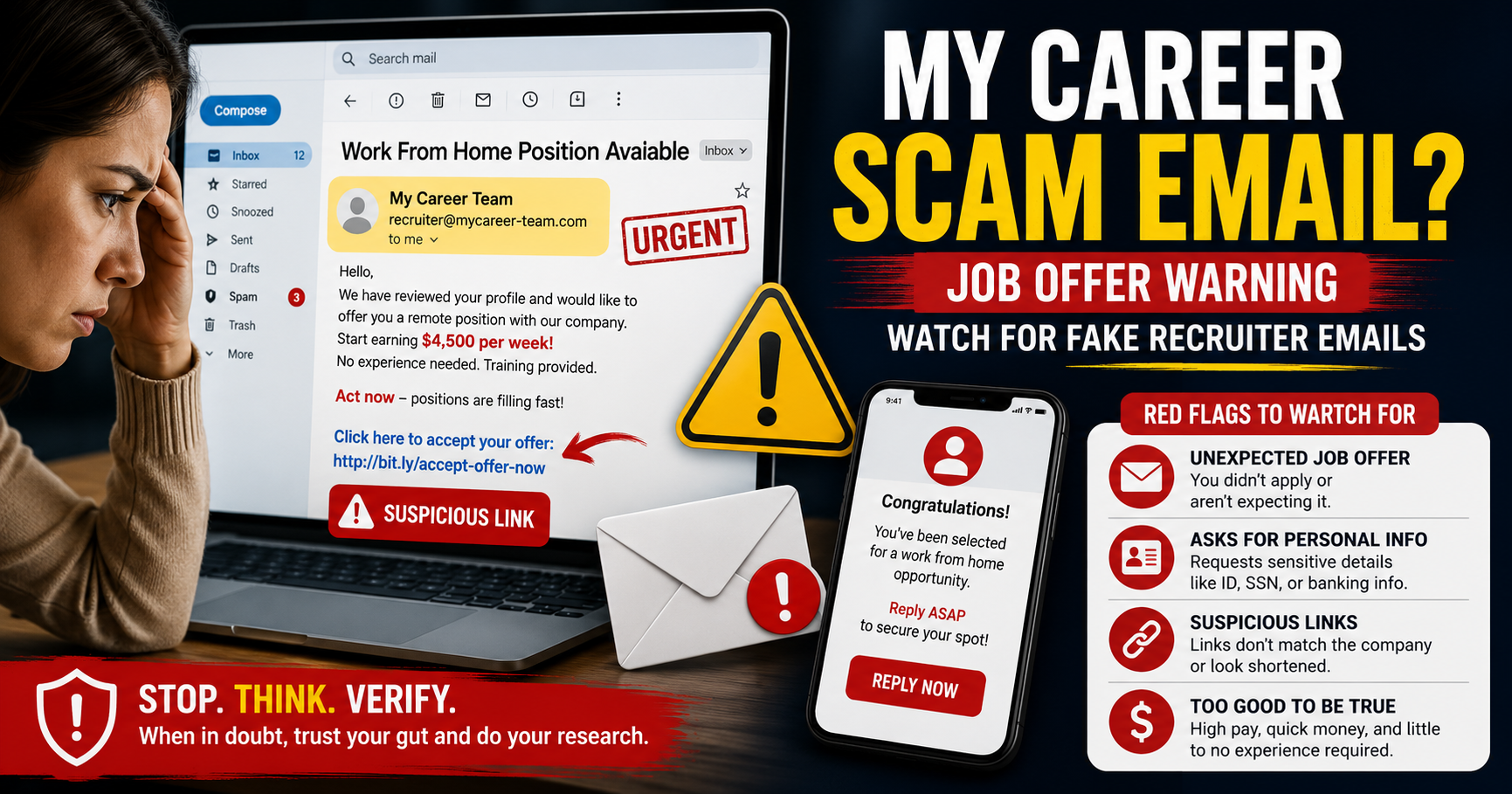
Consumers continue to receive fraudulent job offer emails claiming they have been selected for employment opportunities they never applied for.
Many of these messages appear to come from legitimate job boards, recruiters, or employment websites. In some cases, scammers even reference real companies or create fake company websites to make the offer appear legitimate.
If you receive an unexpected job offer email, proceed with caution.
What Is the Fake Job Offer Email Scam?
The Fake Job Offer Email Scam is an employment fraud scheme designed to collect personal information, steal money, or both.
Scammers often claim:
-
A company reviewed your resume.
-
You have been selected for employment.
-
A recruiter found your profile online.
-
A job board referred your information.
-
Immediate hiring is available.
The messages frequently create a false sense of legitimacy by referencing well-known employment websites or real businesses.
How the Scam Works
A typical fake employment scam follows these steps:
-
You receive an unsolicited job offer email.
-
The message claims you are qualified for a position.
-
You are instructed to submit personal information.
-
The scammers may conduct fake interviews.
-
Victims are asked for additional information or payments.
-
The promised job never materializes.
The scammers may continue communicating for days or weeks before requesting money or sensitive information.
Common Warning Signs
Several red flags appear in many employment scams.
You Never Applied
Be skeptical of job offers for positions you never applied for.
Immediate Hiring
Legitimate employers usually conduct interviews and screening processes.
Requests for Personal Information
Scammers often seek:
-
Social Security numbers
-
Banking information
-
Copies of identification documents
-
Driver’s license information
Upfront Payments
Victims may be asked to pay for:
-
Training materials
-
Background checks
-
Equipment
-
Certifications
-
Processing fees
Legitimate employers generally do not require applicants to pay upfront fees.
Suspicious Email Addresses
Many scams use free email services or domains that do not match the company’s official website.
Why Scammers Use Real Company Names
Fraudsters often impersonate legitimate businesses because:
-
It creates trust.
-
Victims are more likely to respond.
-
Company names appear familiar.
-
Fake websites can look convincing.
Some scammers even create websites that closely resemble legitimate companies.
Employment Scams Are Increasing
Job seekers are increasingly targeted through:
-
Email
-
Text messages
-
Social media
-
Job boards
-
Messaging apps
Work-from-home opportunities are particularly common targets for scammers.
How to Protect Yourself
Research the Company
Verify the employer independently using official websites and contact information.
Verify Recruiters
Contact the company directly if you are uncertain about a recruiter’s identity.
Never Pay for a Job
Legitimate employers do not charge applicants to obtain employment.
Protect Personal Information
Avoid sharing sensitive information until you have verified the company’s legitimacy.
Trust Your Instincts
If something feels suspicious, investigate before responding.
What If You Already Responded?
If you provided information:
-
Stop communicating with the sender.
-
Monitor financial accounts.
-
Review your credit reports.
-
Watch for identity theft activity.
-
Save all communications.
Taking action quickly may help limit potential harm.
Related Resources
Looking for additional consumer resources?
If an acting or modeling invitation leads to a paid membership presentation, read our Nine9 guide to talent-listing fees, casting claims and cancellation. Nine9 is an identifiable service; a membership offer is different from an employer offering you a job.
Related Scam Warnings
Consumers researching fake job offers may also be interested in:
Have You Received a Fake Job Offer Email?
Share your experience below.
-
Which company name was used?
-
Did you apply for the position?
-
Were you asked for personal information?
-
Did the sender request money?
-
Was a fake website involved?
Your experience may help other job seekers recognize and avoid employment scams.
Disclaimer
ThinkItsAScam.com is an independent consumer information website. We are notaffiliated with MyCareer, Asset Management, Alliance Asset Management, or any related organization. This article is intended for educational purposes only and to help consumers identify common employment and job recruitment scams.
Leave a Reply